Traveling with a pack of tarot cards makes faraway places feel familiar. While it’s no substitute for learning the history and language of a place, tarot-informed travel can give you a more personal, memorable experience than poring over a guidebook or herding around behind a tour guide.
Tarot-informed travel is simple. Look for tarot-like scenes in the world around you. They may be things that match visually, or in some other way capture the energy of a tarot card you know. Assign a card to the scene, and then see what meaning arises from the comparison. What does the juxtaposition make you feel about the place? And how does the place, in turn, deepen your understanding of the card?
My recent trip to Japan gave me a new playground for this game.

Here are some travel pics from my three-week vacation to Japan, matched with cards from some of my favorite tarot decks. What do you think about the associations? Would you see things the same way?
The 10 ofWater Bottles
On a hot day in Tokyo, we pass a schoolyard at recess. Kids in green hats play noisily while adults look on. The arc of the water bottles is a visual echo connecting it in my mind to the 10 of Cups from the Smith-Waite Centennial Tarot Deck. From now on, whenever I see this card, I will hear the squeals of children playing in the distance.


More on the Happy Child Front
This preschool maxi-stroller turns my mind to the 6 of Cups from Tarot del Fuego. The adorable vibe is unmistakable, but it’s hard to imagine how the contraption would actually work. 6 of Cups = childhood, nostalgia, and safety… with a little bit of whimsy mixed in.


Red and White
At the Kenrokuen Garden in Kanazawa, I happen upon a couple posing for an engagement portrait. They look young and picture-perfect, but also absolutely terrified. The obvious parallel is to the 2 of Cups by Pamela Colman Smith, in which two people gaze lovingly into each other’s eyes. But the red and white umbrellas are so striking, and I want a less generic association.
In the Tarot, red and white are symbolic of passion and purity. The symbol of the red rose and white lily is sprinkled throughout most traditional tarot decks. In the independently-conceived Mary El Tarot, the 2 of Cups is unrecognizable in relation to its traditional prototype. But Mary El juxtaposes red and white with great animation, revealing more about the thrill, struggle, and risk inherent in romantic unions. For me, it is a better match for the nervous energy palpable beneath this staged scene.
Later on I learn that the Japanese have a word for this color combination — kohaku — and that it is a traditional feature of Japanese weddings. The Japanese tradition also sites purity and passion, but adds the idea of good fortune to the mix. Let’s all wish this couple well!


Abundance
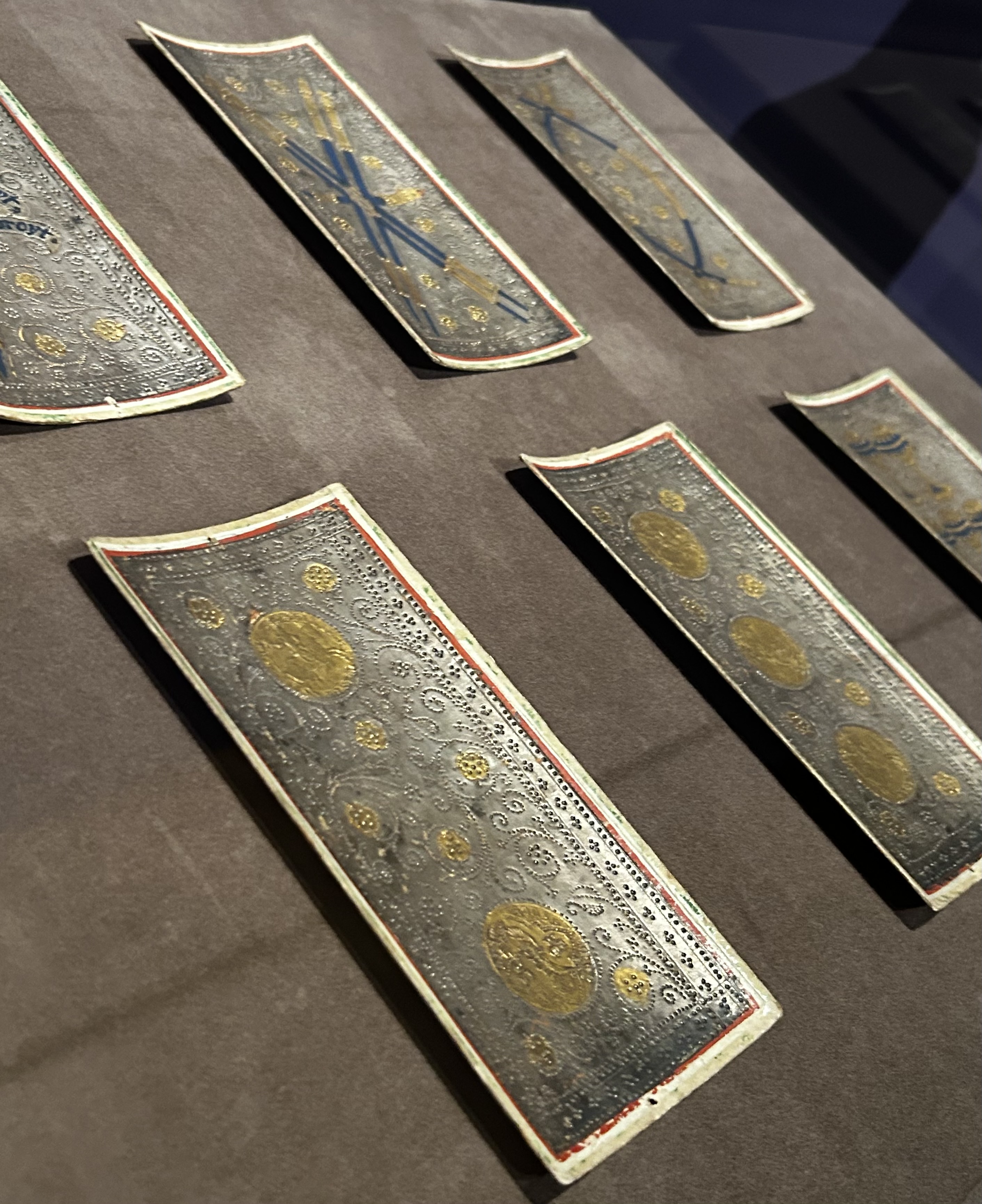
This print at the Sumida Hokusai Museum supports my thesis that three is the magic number for partying women! Seeing it next to the 3 of Cups from the Brady Tarot (another woodcut!), I suddenly want to do all my dancing in groups of three!


Water and Earth
Granted, the washer/dryer I use in a Kyoto laundromat works with the elements of Water and Air. But as I watch my travel duds being tossed, agitated, and tumbled, my mind goes to the 2 of Coins — an Earth sign card. The argy-bargy looks chaotic and seems to take forever (thank you, infinity sign). But eventually, it all pays off. This image is from the Golden Tarot by Kat Black.)


Hot-Headed Royals
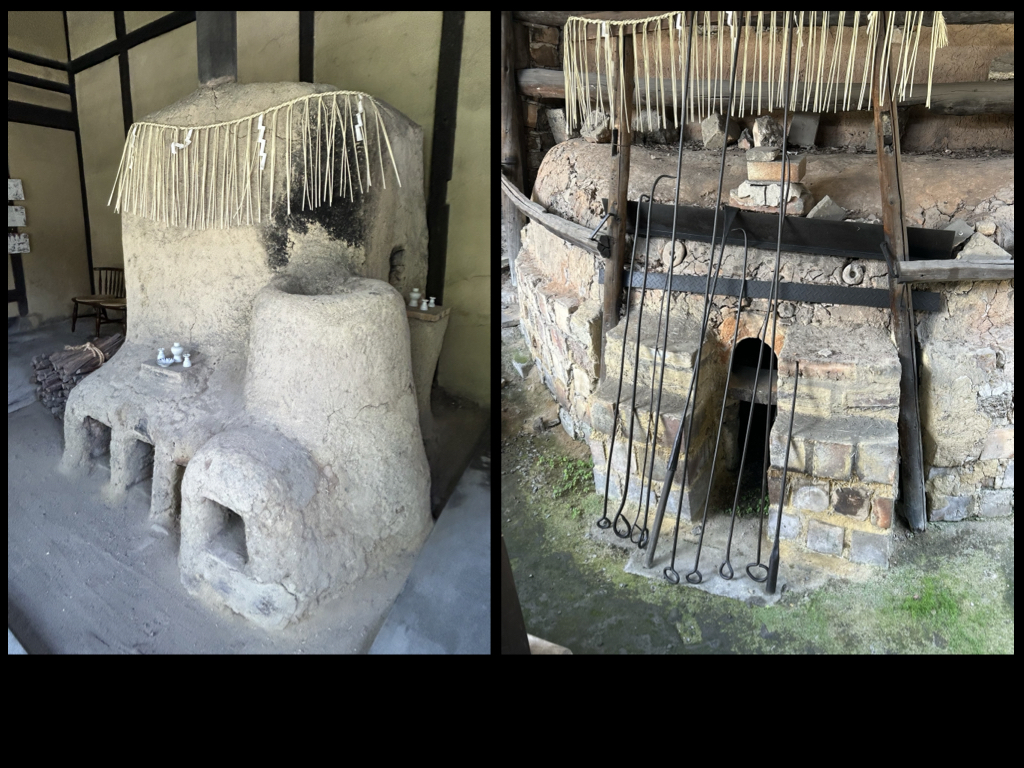
Coming across an impressive kiln at the Kawai Kanjiro House in Kyoto (the museum and former residence of the nationally-beloved ceramicist), I exclaim, “that is the mother of all kilns!” — and immediately dub it the Queen of Fire (aka Queen of Wands). But in the next room, there is another kiln that is even more massive. Does that necessarily make it the King? Here are the two, side-by-side:

It can be tricky to make sense of the court cards, and the reflex to make the big one the King and the smaller one the Queen doesn’t feel right to me. So I inquire further. I learn that while the small kiln was the artist’s personal machine — a helper of sorts for his private work — the large kiln was not Kanjiro’s alone. He shared it with other artists in the community. This makes the large kiln feel more like the Queen to me. The Queens are community-centered figures, providing for their own and for others whenever possible. In relation, then, the first kiln, with it’s pageboy hairdo, looks more like the Page of Wands. Since both kilns are so sculptural, I liken them to the similarly muscular royals in the Modern Spellcasters Tarot.

Travel Far Away From the Little White Book
This activity works wonders for tarot students looking to go beyond the Little White Book. Personalize your tarot card meanings! Build your own associations! Play the game in any environment — abroad or in your own home. Then let me know when you find something fun by using the comment section below.
Want more tarot-travel? See this post about my trip to Victoria, B.C. just before the Covid lockdown.

Yetta Snow is a professional tarot reader and educator based in Seattle, Washington. Her business, Present Day Tarot, approaches the Tarot as a way to bring meaning into every moment of every day.
For news about tarot classes, specials, and more from Present Day Tarot…




Leave a Reply